

Advanced PFAS Removal Ion Exchange Resin Manufacturer: Sunresin Expands Capacity to Meet Global Water Standards
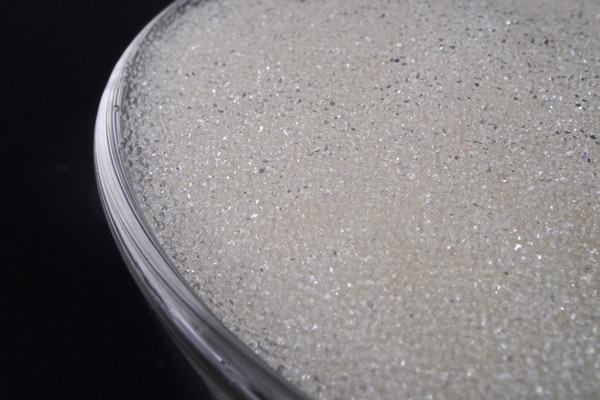
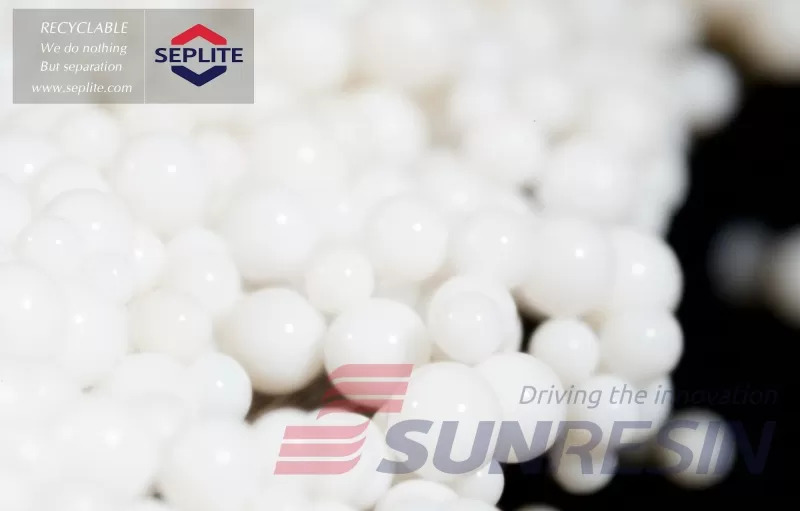
Product Engineering: Advanced Molecular Architecture of SEPLITE® LSI 106G
Achieving consistent compliance with stringent drinking water standards requires specialized polymeric media tailored specifically for target contaminants. Standard ion exchange materials often lack the selectivity necessary to isolate trace synthetic chemicals from complex water matrices containing competing background anions, such as sulfates, nitrates, and bicarbonates. To address this persistent challenge, Sunresin engineered SEPLITE® LSI 106G, a specialized strong base anion exchange resin built on a gel-type crosslinked polystyrene copolymer matrix. The material incorporates Type I quaternary ammonium functional groups, which create a dense positive charge distribution across the polymer matrix.
The primary mechanism driving contaminant capture relies on a dual-interaction pathway. First, ionic attraction draws the negatively charged head groups of fluorinated molecules directly to the fixed quaternary ammonium sites. Second, the hydrophobic polystyrene matrix interacts with the fluorinated carbon tails of the target compounds. This synergistic mechanism allows the resin to bind target contaminants tightly, effectively reducing concentrations from microgram levels down to non-detectable parts-per-trillion levels.
When evaluated against standard strong base anion resins, SEPLITE® LSI 106G demonstrates approximately 30 percent higher operating capacity. Furthermore, the resin exhibits rapid adsorption kinetics, which allows treatment plants to operate at shorter empty bed contact times. Shorter contact times directly reduce vessel dimensions and overall capital expenditure for utility providers. Physical bead integrity also remains critical for long-term column operation under continuous hydraulic stress. The resin features high osmotic and mechanical stability, which prevents bead attrition and pressure drop increases during high-flow operations. Independent testing bodies have verified these performance attributes, granting certifications such as NSF/ANSI 61 and Water Quality Association standards for potable water applications.
Field Performance & Case Applications: Overcoming Short-Chain and Long-Chain PFAS Challenges
While long-chain compounds like perfluorooctanoic acid and perfluorooctane sulfonate remain well-documented targets, water treatment operators increasingly encounter short-chain variants, such as perfluorobutanoic acid and perfluorobutane sulfonate. Short-chain molecules possess higher solubility, greater water mobility, and lower hydrophobicity than their long-chain counterparts. Consequently, traditional media like activated carbon suffer from early short-chain breakthrough, forcing operators to replace filter beds prematurely and increase operational costs.
Field deployments and pilot evaluations highlight the practical advantages of utilizing specialized polymeric media in difficult treatment conditions. In drinking water remediation projects across diverse regions, treatment systems loaded with SEPLITE® LSI 106G have consistently achieved target effluent goals below regulatory limits. In field comparison trials involving groundwater contaminated with mixed synthetic compounds, the resin maintained full operational capacity across thousands of bed volumes. The material successfully bound both long-chain species and shorter carbon chain structures, delaying breakthrough significantly longer than standard carbon filters.
Additionally, industrial facilities and site remediation managers face complex water matrices containing high total dissolved solids, organic matter, and industrial byproducts. Environmental engineers frequently implement advanced ion exchange technology for efficient short-chain PFAS removal within multi-stage filtration trains. Case observations from landfill leachate remediation and industrial discharge treatment demonstrate that selective anion resins maintain steady performance even when handling fluctuating influent concentrations. By resisting organic fouling and maintaining high mechanical strength, the resin reduces media turnover rates, lowers secondary waste generation, and stabilizes operating budgets for facility managers.
Industrial-Scale Manufacturing: Ensuring Batch-to-Batch Product Consistency
As regulatory deadlines approach worldwide, water utilities and engineering procurement contractors require strong assurances regarding supply chain security and product quality. A technical breakthrough in resin formulation provides little value if global production volumes cannot keep pace with municipal deployment schedules. To solve potential supply bottlenecks, Sunresin(Sunresin New Materials Co. Ltd.) has systematically scaled its manufacturing infrastructure, achieving a total annual resin production capacity of 100,000 cubic meters.
The company operates modern, automated production centers across multiple facilities, including specialized manufacturing bases in Gaoling and Pucheng. These facilities incorporate advanced process automation to supervise polymerization, functionalization, and post-treatment washing sequences. Continuous monitoring of reaction parameters ensures high batch-to-batch consistency. Particle size distribution represents a crucial specification for column hydraulics; accordingly, production control protocols maintain over 95 percent of resin beads within the 0.35 to 1.25 millimeter range.
Maintaining strict quality control protocols minimizes physical defects, osmotic shock vulnerability, and organic extractables. Each production batch undergoes rigorous laboratory screening to confirm total exchange capacity, moisture retention, and kinetic performance before packaging. This industrial scale provides global distributors and system builders with guaranteed lead times, price stability, and reliable access to high-grade media during periods of peak market demand.
Deployment Scenarios: Integrating Resin Technology with System Engineering
Optimizing water treatment performance extends beyond selecting superior media; it also demands cohesive system design and ongoing operational support. Specialized resins operate within engineered pressure vessels, lead-lag column configurations, and mobile sorption units designed to accommodate variable flow rates and site footprints. Proper vessel design ensures even flow distribution, prevents channeling, and maximizes resin utilization across the entire bed depth.
To support project execution across international markets, Sunresin New Materials Co. Ltd. integrates material supply with comprehensive equipment engineering capabilities. The company offers modular skid systems, custom vessel fabrication, and process optimization consulting. Furthermore, regional infrastructure plays a pivotal role in maintaining service quality. The presence of direct European warehousing and technical support hubs, such as facilities in Düsseldorf, Germany, enables rapid dispatch of materials and emergency media supply to regional projects.
Environmental engineers can combine high-capacity resins with full EPC system delivery to accelerate commissioning timelines. Through a complete approach that links advanced polymer chemistry, robust manufacturing, and localized support, global water utilities can achieve regulatory compliance while managing lifecycle operational costs effectively.
For more technical specifications and product details, visit the official website at https://www.seplite.com/.
Sunresin New Materials Co. Ltd.
Sunresin New Materials Co. Ltd.
+86 29 8669 1600
email us here
Legal Disclaimer:
EIN Presswire provides this news content "as is" without warranty of any kind. We do not accept any responsibility or liability for the accuracy, content, images, videos, licenses, completeness, legality, or reliability of the information contained in this article. If you have any complaints or copyright issues related to this article, kindly contact the author above.
