
Your science and technology news reporter
Provided by AGP
UTMSYS Introduces USX51 Computing Flight Controller for GNSS Denied and Autonomous UAV Development
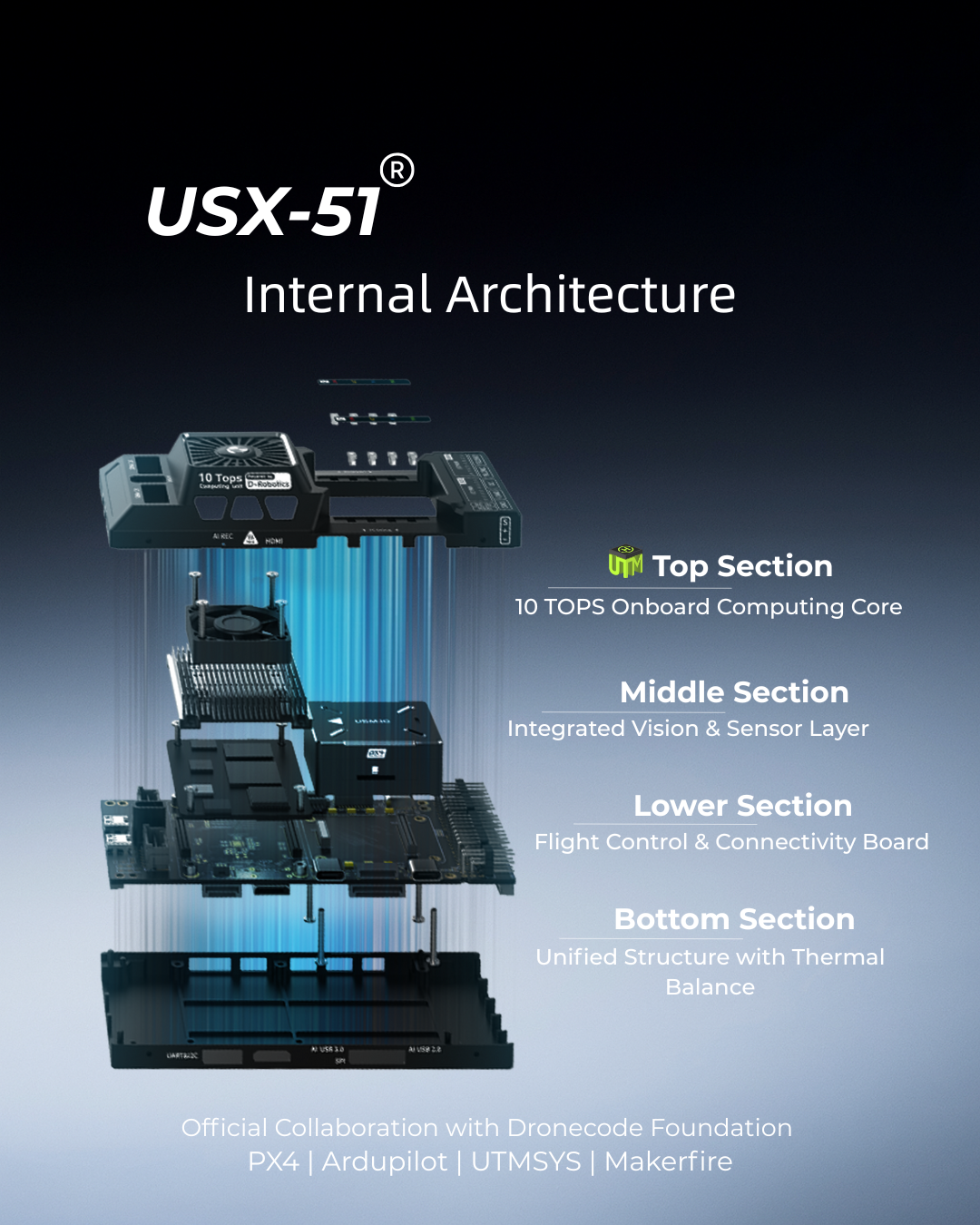
USX51 decoupled flight control and onboard computing architecture
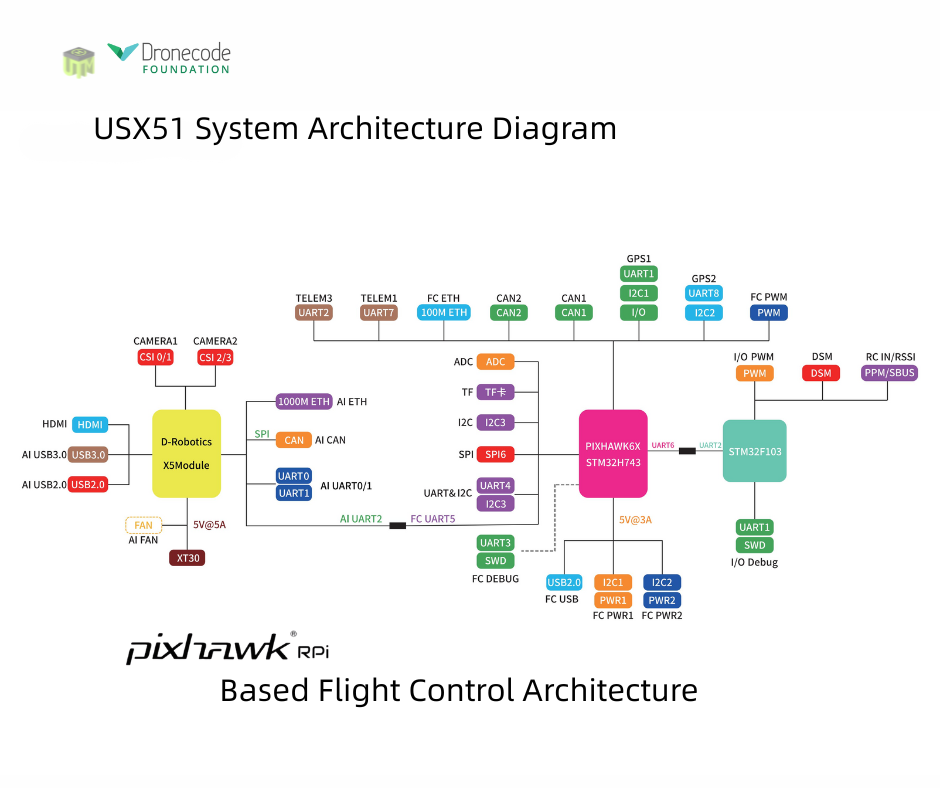
Decoupled flight control and edge computing architecture of the USX51 UAV platform
The USX51 system integrates Pixhawk 6X and RDK X5 to support PX4 based UAV development for GNSS denied, VTOL, and multi sensor applications.
The goal of USX51 is to simplify complex UAV system integration for developers working on real world autonomous applications.”
SHENZHEN, CHINA, May 7, 2026 /EINPresswire.com/ -- As UAV applications continue moving toward autonomous inspection, GNSS denied navigation, and multi sensor missions, developers are facing increasing challenges in system integration, data bandwidth, and onboard computing requirements.— Makerfire Engineering Team
Traditional flight controller architectures are often optimized for stabilization and basic navigation tasks, but complex UAV projects now require additional perception, visual processing, and high bandwidth sensor integration.
To address these challenges, UTMSYS introduces the USX51 Computing Power Flight Controller, a system architecture that combines the Pixhawk 6X flight controller with the D Robotics RDK X5 edge computing module.
The system is designed to support PX4 based UAV development while separating real time flight control tasks from high compute perception workloads. This decoupled architecture helps maintain flight stability while allowing developers to expand into vision based and autonomous applications.
USX51 supports development scenarios including:
GNSS denied navigation
VTOL mission platforms
Multi sensor integration
Visual perception and tracking
ROS2 based robotics workflows
Research and autonomous UAV development
The Pixhawk 6X handles flight critical control functions, while the RDK X5 module provides onboard computing capability for visual processing, sensor fusion, and autonomous related workloads.
The system also provides multiple communication interfaces including Ethernet, CAN, UART, and I2C, allowing developers to integrate cameras, thermal modules, lidar systems, and additional peripherals into their UAV projects.
According to the development team, the goal of the USX51 platform is not only to provide hardware, but to simplify complex UAV system integration for developers, research teams, and robotics engineers working on real world deployment scenarios.
Current ecosystem development around USX51 includes PX4 integration, ROS2 workflows, developer testing programs, and community based project collaboration.
More information about the USX51 platform can be found at:
https://meshnology.com/products/usx51-computing-power-flight-controller
About Makerfire
Makerfire is a technology brand focused on UAV systems, robotics development platforms, LoRa communication devices, and open hardware ecosystems. The company supports developers, research teams, and engineering communities through modular hardware platforms and ecosystem collaboration.
Website: https://www.makerfire.com
LinkedIn: https://www.linkedin.com/company/makerfirecompany/
Business Cooperation: business@makerfire.com
Media Contact: pr@makerfire.com
Makerfire
pr@makerfire.com
LIU HEZI
Visit us on social media:
LinkedIn
Based Autonomous UAV Platform Demo
Legal Disclaimer:
EIN Presswire provides this news content "as is" without warranty of any kind. We do not accept any responsibility or liability for the accuracy, content, images, videos, licenses, completeness, legality, or reliability of the information contained in this article. If you have any complaints or copyright issues related to this article, kindly contact the author above.
