

Global Marine Fin Stabilizer Market: Navigating Toward a USD 32.3 Billion Valuation by 2035
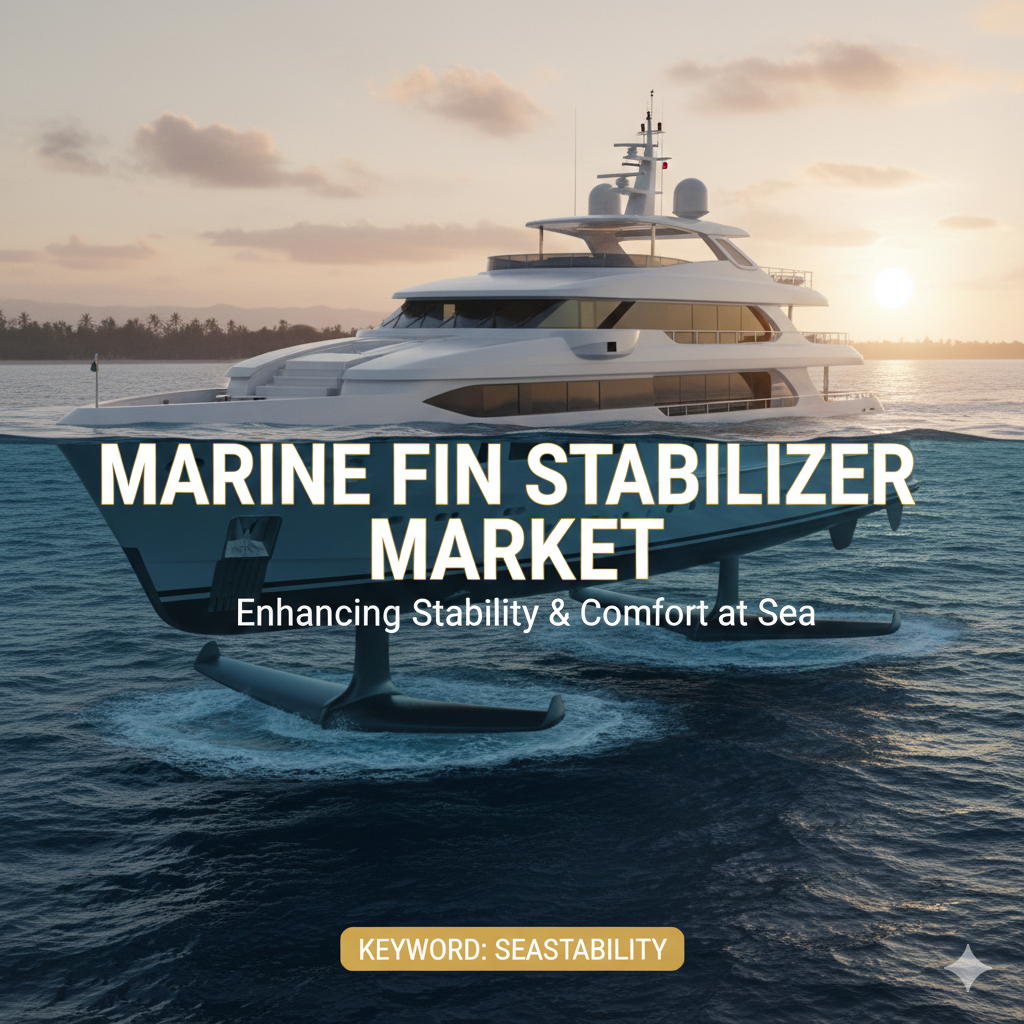
Marine Fin Stabilizer Market
The marine fin stabilizer market is projected to grow from USD 10.4 billion in 2025 to USD 31.0 billion by 2035, at a CAGR of 11.5%.
NEWARK, DE, UNITED STATES, February 3, 2026 /EINPresswire.com/ -- The global maritime industry is witnessing a paradigm shift in vessel design, where stability is no longer just a safety requirement but a core pillar of operational efficiency and passenger experience. The Marine Fin Stabilizer Market, valued at USD 10.4 billion in 2025, is projected to reach an impressive USD 32.3 billion by 2035. This represents an absolute growth of 179.2%, fueled by a robust CAGR of 12.1%.
As maritime trade intensifies and the luxury cruise sector undergoes a post-pandemic renaissance, the demand for sophisticated roll-reduction technologies is skyrocketing. From naval frigates requiring precision weapon platforms to mega-yachts demanding "zero-speed" comfort, marine fin stabilizers have become indispensable.
Market Snapshot: 2025–2035
The market’s evolution over the next decade is characterized by two distinct growth phases:
• The Foundation Phase (2025–2030): The market will climb to USD 12.1 billion, contributing roughly 40% of the decade's total growth. This period focuses on the mass adoption of active fin stabilizers across commercial fleets to meet tightening safety regulations.
• The Transformation Phase (2030–2035): A surge to USD 32.3 billion will be driven by the integration of IoT, AI-driven automation, and "Smart" stabilization systems that communicate directly with vessel propulsion for maximum fuel efficiency.
Request For Sample Report | Customize Report | Purchase Full Report
https://www.futuremarketinsights.com/reports/sample/rep-gb-6171
Segment Analysis: The Dominance of Retractable Technology
The market is increasingly leaning toward high-efficiency, versatile hardware that minimizes the trade-off between stability and speed.
1. By Product Type: Retractable Fin Stabilizers (65% Market Share)
Retractable systems are the gold standard for modern shipbuilding. By 2025, they will command nearly two-thirds of the market.
• Operational Edge: These fins can be stowed within the hull during high-speed transits or docking, significantly reducing parasitic drag and protecting the hardware from external damage.
• Fuel Efficiency: In an era of high bunker costs and ESG mandates, the ability to eliminate drag when stabilization is not required provides a clear economic advantage for long-haul merchant vessels and cruise liners.
2. By Application: The Cruise and Passenger Sector (40% Market Share)
Passenger comfort is the most direct driver of revenue. Motion sickness is the primary deterrent for the cruise industry; thus, advanced stabilizers are marketed as a "luxury necessity."
• The "Comfort" Premium: Operators of ferries and cruise ships utilize stabilizers to improve vessel reputation and customer retention.
• Regulatory Push: International maritime safety standards are increasingly stringent regarding the maximum allowable roll for passenger-carrying vessels, making these systems a mandatory integrated component rather than an optional add-on.
Regional Market Dominance and Strategic Growth Hubs
The global landscape of the marine fin stabilizer market is characterized by specialized regional clusters, each leveraging distinct industrial strengths to drive the industry toward its 2035 valuation. The United States stands at the forefront of this expansion, projected to lead with a 12.5% CAGR. This growth is fueled by a unique dual demand: the nation hosts the world’s largest cruise passenger base, necessitating premium passenger comfort, while simultaneously executing high-budget naval modernization programs. These military initiatives require ultra-stable platforms to support the next generation of advanced sensors and weapons systems, making the U.S. a critical theater for high-end stabilizer adoption.
In Europe, the market is anchored by Germany, which serves as the continent's primary engineering and innovation hub. Germany’s growth, projected at an 11.8% CAGR, is a testament to its world-class precision engineering and its established leadership in specialized vessel construction. This European influence extends into Italy and France, where manufacturers have carved out a dominant niche in the luxury superyacht sector. These Mediterranean powerhouses specialize in aesthetic, lightweight, and low-noise stabilizer solutions, catering to an elite clientele that prioritizes "zero-speed" stability and seamless vessel integration.
Meanwhile, the Asia-Pacific region is dominated by the industrial might of South Korea and Japan, which are expanding at CAGRs of 11.2% and 10.6%, respectively. South Korea’s market strength is inherently tied to its status as a global leader in commercial shipbuilding, where stabilizers are increasingly integrated into massive container ships and LNG carriers to protect cargo and optimize fuel efficiency. Japan complements this with its unparalleled expertise in advanced automation and robotics. By focusing on the development of "smart" stabilizers that utilize sophisticated control algorithms and automated performance monitoring, Japan continues to push the boundaries of maritime stabilization technology.
Critical Trends Shaping the Future
The "Smart" Stabilization Revolution
Modern systems are moving beyond simple hydraulics. The integration of AI and Predictive Modeling allows stabilizers to "anticipate" wave patterns using forward-looking sensors. This reduces the reaction time of the fins, leading to a smoother ride and less wear and tear on the machinery.
Electrification and Sustainability
The industry is shifting from traditional hydraulic actuators to Full-Electric Fin Stabilizers. Electric systems offer several advantages:
1. Lower Noise Levels: Crucial for the "silent luxury" demanded by yacht owners.
2. Zero Oil Leakage Risk: Aligning with "Zero Discharge" environmental policies in protected waters.
3. Energy Recovery: Some advanced systems can now regenerate small amounts of electricity from the kinetic energy of the water passing over the fins.
Competitive Landscape: Industry Titans
The market is highly consolidated, with the top players focusing on R&D to maintain their lead:
• Naiad Dynamics (18.5% Share): The benchmark for active control technology.
• Fincantieri S.p.A. & Kongsberg: Dominant in large-scale commercial and naval integrations.
• Seakeeper Inc.: While famous for gyros, their expansion into fin technology for smaller luxury vessels has disrupted the "Small to Medium" segment (<50m).
Stakeholder Roadmap: A Strategic Framework
To capture the USD 4.3 billion absolute increase in value, stakeholders must align with the following priorities:
• Governments: Should provide tax credits for "Green Retrofits," encouraging older vessels to install modern, fuel-efficient stabilizers to meet carbon emission targets.
• OEMs: Must focus on Modular Design. Providing stabilizers that are easy to install during a standard dry-docking (retrofit) will tap into the massive existing global fleet market.
• Investors: Opportunities lie in companies specializing in Active Control Software and Composite Material Manufacturing, as fins move away from heavy steel toward lightweight, high-strength carbon fibers.
Sudip Saha
Future Market Insights Inc.
+1 347-918-3531
email us here
Legal Disclaimer:
EIN Presswire provides this news content "as is" without warranty of any kind. We do not accept any responsibility or liability for the accuracy, content, images, videos, licenses, completeness, legality, or reliability of the information contained in this article. If you have any complaints or copyright issues related to this article, kindly contact the author above.
